
Exact memorial confidence
Names, cemetery details, plot information, records, and field evidence are reconciled before care.
Preservation-led memorial care • Tulsa, Oklahoma
Choose memorial care
Start with one of four common needs. You will see the best-fit service, what it includes, the starting price, and exactly what Graveshine confirms before you approve care.
Already requested care? Track its progress →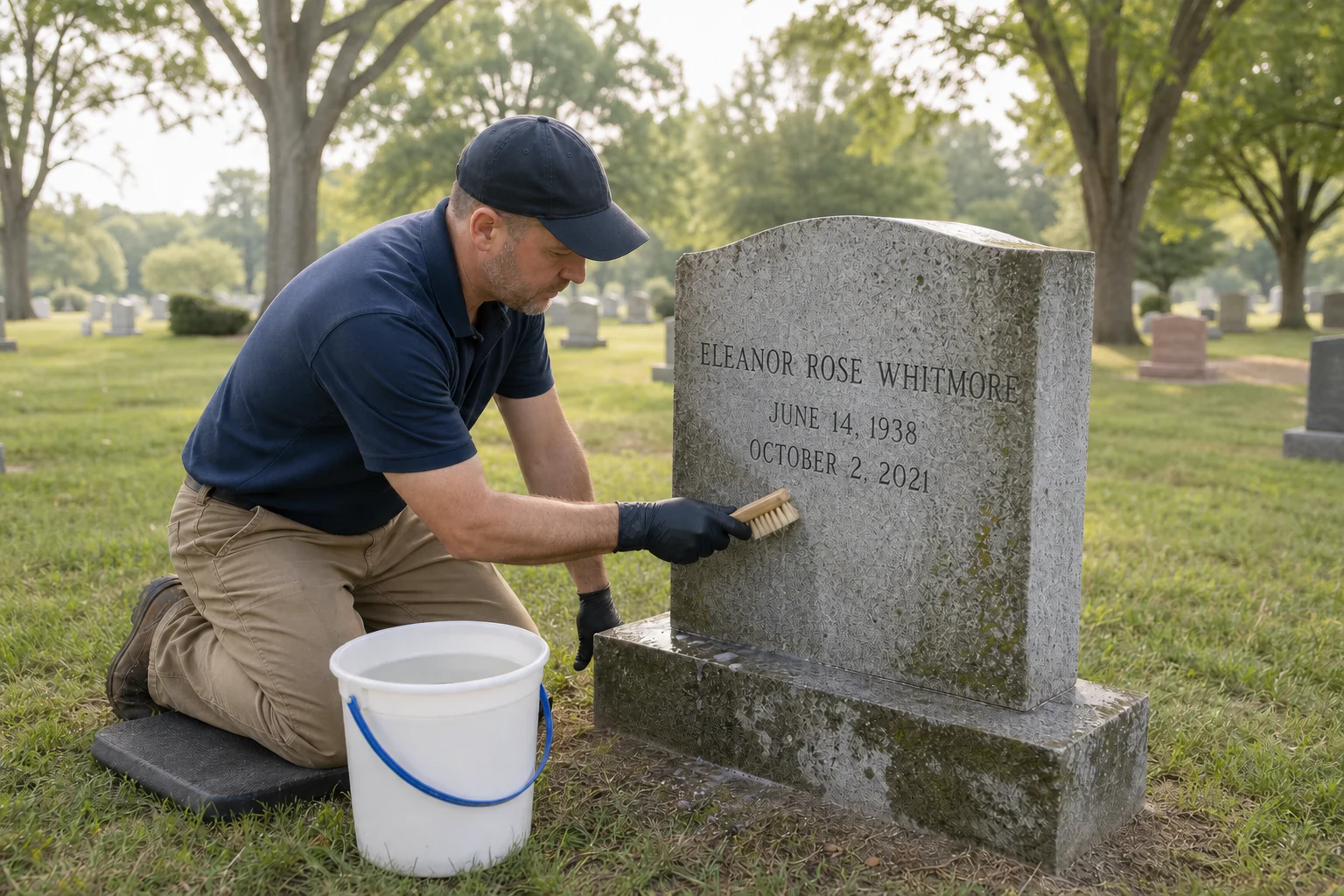
Choose what you need
You do not need to know the memorial material or the perfect service name. Pick the closest match and Graveshine will verify the details before you approve anything.
I know some details, but I need help confirming the memorial.
Start with the details you know
A care coordinator reviews the family and cemetery details available and helps validate the memorial before care is scoped.
We reconcile the available family and cemetery details before recommending any field visit or memorial care.
No surprise work: starting prices are planning guides. Memorial size, material, condition, access, cemetery rules, travel, and timing are reviewed in the final written estimate. Compare the full catalog and every starting price.
A higher standard of care
Graveshine is designed around the decisions that protect the memorial and the family—not only the task performed during one visit.
Names, cemetery details, plot information, records, and field evidence are reconciled before care.
Customer authority, cemetery requirements, access rules, and timing are recorded before dispatch.
Water-first care, discreet testing, disclosed products, weather limits, and stop-work boundaries guide the field plan.
Cleaning, tributes, recurring stewardship, bronze, resetting, inscriptions, estates, and cemetery programs share one intake path.
Matched photos, field notes, approved scope, and safety flags are reviewed before the family report is released.
Location, permissions, condition, methods, reports, and next-care recommendations can remain together across visits.
Complete service list
Scan the complete Graveshine offering in one place. Routine services can begin with an availability review; complex work starts with an assessment or written proposal.
A care coordinator reviews the family and cemetery details available and helps validate the memorial before care is scoped.
An in-person cemetery visit to locate the memorial, confirm its position, and capture an initial condition snapshot.
A gentle, material-aware visit for an eligible memorial, followed by a private record of the completed care.
A test-first treatment plan for eligible algae, lichen, moss, or biofilm. When review shows a biocidal cleaner is appropriate, Graveshine uses D/2 Biological Solution on eligible stone.
Conservative surface care for eligible bronze plaques and metal elements that respects existing patina and original finishes.
A documented visit for permitted light plot tidying when memorial cleaning is not requested.
Permitted light plot and vase-area tidying added to a qualifying memorial-care visit.
A thoughtful, documented visit with a cemetery-approved flower, flag, or tribute placement.
A renewable annual rhythm for families who want the memorial checked and respectfully tended across the year.
Consistent year-round oversight with four documented visits, seasonal attention, and a growing memorial-care record.
Six documented visits with closer monitoring, an annual condition survey, one permitted tribute, and priority post-storm verification.
A scheduled live video visit, reading, prayer, or family-approved remembrance where coverage and cemetery rules allow.
A durable location and inscription record with GPS reference, plot details, inscription photography, and related memorial notes.
A durable record of memorial identity, location, permission, condition, methods, reports, and recommended next steps.
Preservation-first memorial care with Veteran record coordination, cemetery-rule verification, and private photo reporting.
Material identification, visible-condition observations, matched photos, risk flags, and a written next-step recommendation.
Ground-supported correction for eligible leaning or sunken memorials after inspection, cemetery approval, and specialist review.
Coordination with an appropriate monument professional for eligible inscription color renewal after material and cemetery review.
A managed request for cemetery approval, memorial matching, and qualified-vendor final-date inscription work.
Photo, sizing, cemetery, and qualified-vendor coordination for an eligible memorial portrait replacement.
Authorized exterior and common-area observations for visible staining, joints, movement, drainage, moisture, and life-safety concerns.
A condition-led exterior care scope developed after an authorized survey, access review, and specialist coordination.
A renewable monitoring program with documented exterior or authorized common-area observations and escalation recommendations.
Priority site documentation, hazard flagging, and qualified stabilization coordination after storms, vandalism, or sudden movement.
Non-emergency site documentation, hazard flagging, and qualified-provider coordination for reported storm, vandalism, or movement concerns when safe access and coverage can be confirmed.
A coordinated condition and care assessment for multiple memorials, benches, statues, box tombs, or family structures.
One approved initial scope coordinating care across multiple eligible memorials and family-plot features.
A renewable family-plot plan with coordinated visits, condition monitoring, records, and approved vendor routing.
A bounded pilot to inventory, photograph, and condition-screen a defined group of up to 50 memorials.
Scaled identity, location, photography, and visible-condition documentation for a cemetery section.
A scoped preservation pilot combining documentation, prioritized care recommendations, and partner coordination.
A renewable program for documented monitoring, approved routine care, work-order coordination, and reporting across a defined section.
Mobilization for documented section-level hazard screening, triage mapping, and qualified recovery coordination.
A preservation-first classroom session for cemetery staff, volunteers, churches, or community organizations.
A full-day preservation workshop with an authorized field demonstration and documented safety boundaries.
Condition, priority, photography, and planning documentation assembled to support an organization's grant-preparation process.
Memorial size, material, condition, stability, cemetery rules, travel, access, timing, and specialist requirements can affect the final total.
No care begins until Graveshine confirms the memorial, scope, service window, exclusions, and complete written price.
Other needs
Open only the situation that sounds familiar. Complex care remains assessment-led so families are not asked to purchase the wrong service.
Ask a coordinator to helpUnstable, structural, mausoleum, storm, and complex estate concerns require review, cemetery approval, and the appropriate qualified professional.
Plans renew annually. Each visit begins with a condition recheck; stewardship does not mean automatically repeating unnecessary treatment.
Graveshine verifies condition and cemetery requirements before work. Fragile or unstable memorials are documented and escalated; no scope or price changes happen without customer approval.
Read the care standard →How care works
Your selection tells us where to begin; it never locks you into work that is not appropriate for the memorial.
Pick one of the four common needs or ask a coordinator to help.
Provide the name, cemetery, location, photos, and permission details available.
Start the care request →We verify the memorial, rules, condition, scope, service window, and final price.
After approval, follow the verified stages and receive the private care report.
Track existing care → AI-generated field-documentation illustration — fictional memorial identity — not customer work
Proof of care
A completed report can preserve the memorial identity, location, condition observations, approved work, methods used, matched photos, quality review, and recommended next care window.
Your choice starts a review; it does not authorize unsuitable work. Graveshine confirms the memorial, condition, cemetery requirements, scope, and price before asking you to approve care.
Requirements differ. Graveshine verifies applicable access, vendor, and permission rules before scheduling work.
Share whatever you know. A name, date, cemetery, city, plot record, photo, or related family memorial can help a coordinator validate the location.
Yes, when eligible stone has biological growth and review shows a biocidal treatment is appropriate. D/2 is biodegradable and contains no bleach, acids, or salts, but it is not “all natural.” We spot-test it, follow the current label and safety data, use appropriate protective controls, protect surrounding plantings and drainage, and record the treatment.
Clean potable water is the safest natural starting cleaner, and it is enough for many memorials. Graveshine does not use vinegar, lemon or citrus cleaners, baking soda, or homemade peroxide mixtures as a general stone-care standard. “Natural” does not automatically mean material-safe; condition, chemistry, testing, and long-term effects matter more.
Starting prices are planning guides. The written estimate reflects size, material, condition, cemetery rules, travel, timing, and any specialist needs.
Eligible completed visits include a private report with identity and location details, dated photographs, condition notes, approved work, methods used, safety flags, and recommended next steps.
Ready when you are